In Armamar, Portugal, children who began by exploring the invisible world of bacteria are now asking why some bacteria survive exposure to an antibiotic. A municipality-wide program is showing what becomes possible when microbiology does not end with a single workshop, but returns, deepens and grows with the children.
“How can we help antibiotics continue to work?”
This was the mission presented to seven- to ten-year-olds in Armamar’s primary classrooms. To answer it, they first had to investigate more fundamental questions. What distinguishes a bacterium from a virus? What does an antibiotic target? Why do some bacteria survive exposure while others do not?
These are demanding questions for children of this age. Yet they provide the biological foundations for advice often encountered only at the moment of illness: antibiotics do not work against viruses; use them only when prescribed; follow the advice of a health professional. Those instructions have greater meaning when the underlying biology is understood.
A year earlier, many of these children had been asking where bacteria live and whether they might be found on their pencils, their pets, or their own bodies. Now they were drawing on that first encounter with the microbial world to investigate antibiotic resistance. That change in their questions — not simply the return of the workshop — is the story of a microbiology program designed to grow with them.
From first encounter to next step
In 2025, hands-on microbiology reached every primary-school pupil in Armamar, an experience shared in the International Microorganism Day article “What if every child could explore microbiology in their classrooms?”.
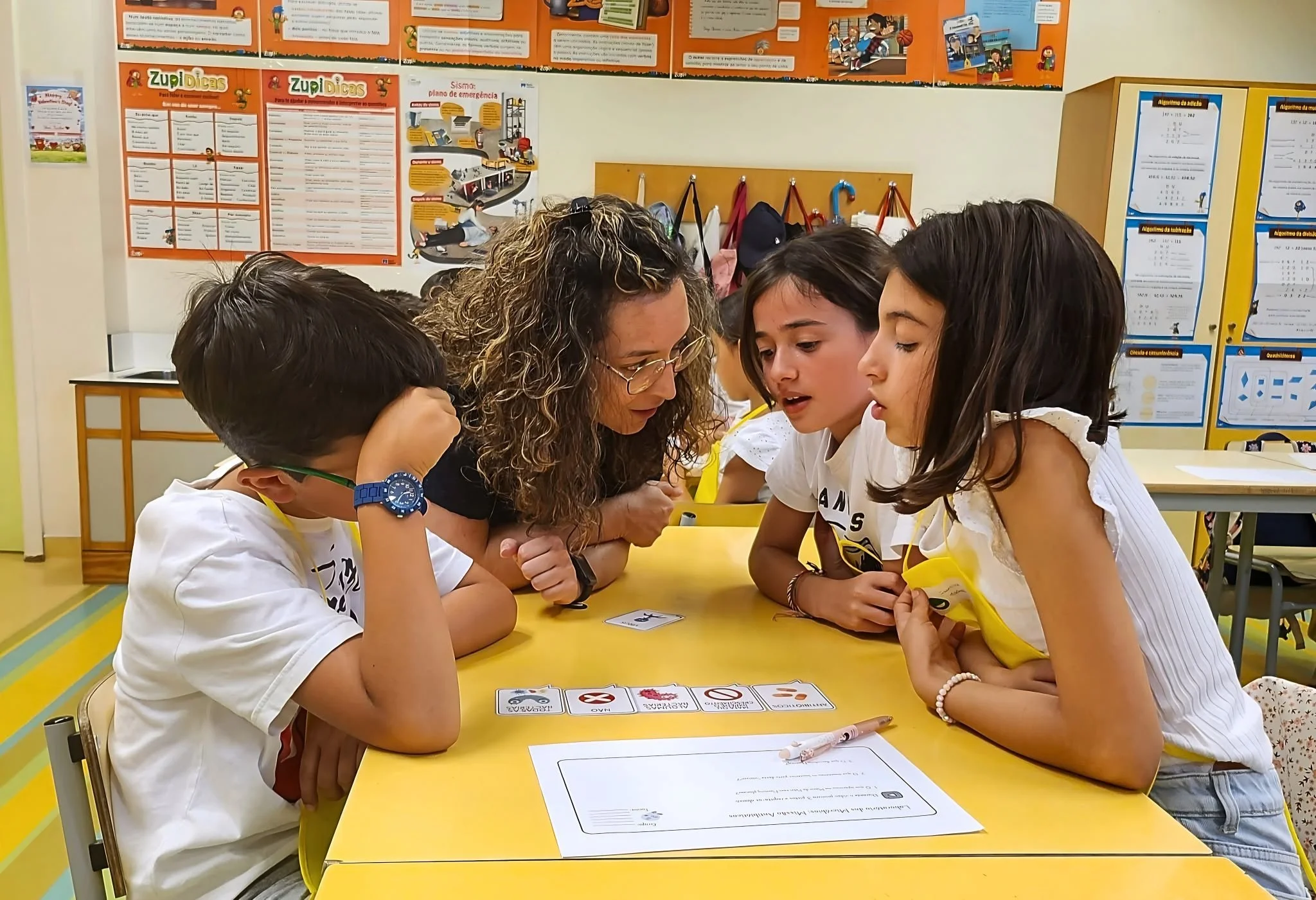
One year later, 153 pupils took part in eight workshops representing two stages of the same learning pathway. Children entering the first year of primary school began with A Vida Invisível das Bactérias (The Invisible Life of Bacteria). Pupils in the second, third and fourth years — who had completed that foundation the previous year — progressed to Hospital dos Micróbios: Missão Antibióticos (Microbe Hospital: Mission Antibiotics), providing a clear entry point for new cohorts and an entry point and returning pupils a next step.
Inside the microbe hospital
“Do antibiotics work against viruses?”
“False.”
The answer was promptly provided. Explaining why required more work.
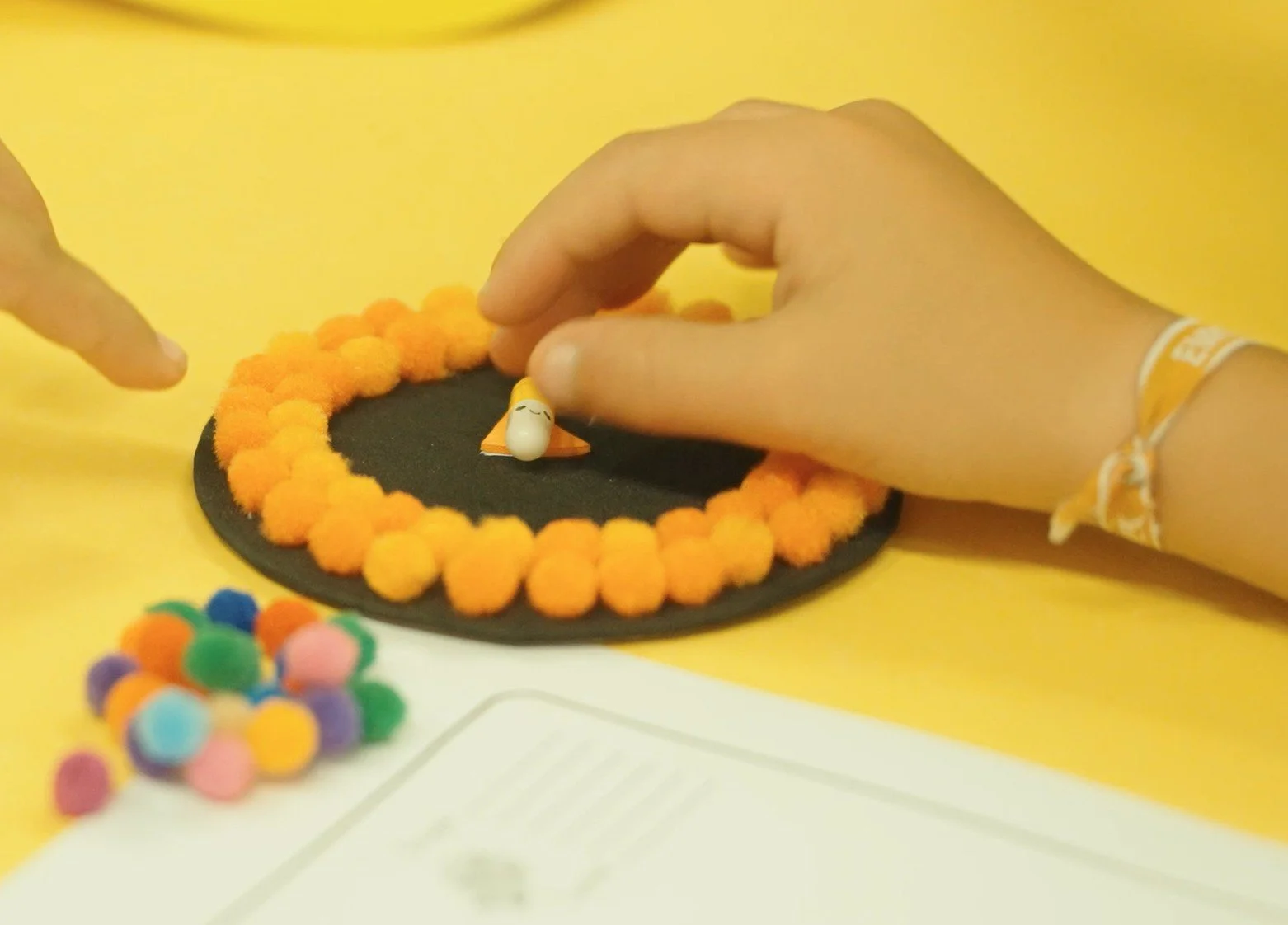
One of the first challenges was to distinguish bacteria from viruses. While both are invisible to the naked eye and both may be discussed in relation to disease, they are not synonymous, and this distinction is important when considering treatment options. Using age-adapted models, the pupils explored how an antibiotic can act on structures or processes in bacteria that viruses do not possess. The children then investigated what happens when a bacterial population is exposed to an antibiotic. In the model, most susceptible bacteria were eliminated, while a few resistant bacteria survived. The pupils followed what happened when those survivors continued to multiply and were asked to reconstruct the process in their own words.
The model helped to clarify a commonly misunderstood idea: it is bacteria, not people, that become resistant to antibiotics. When an antibiotic kills susceptible bacteria or prevents them from multiplying, resistant bacteria may survive and reproduce. Over time, they can become more common in the population.
Rather than memorising a definition of antibiotic resistance, the pupils observed, compared, formulated hypotheses, manipulated models and discussed what they thought was happening.
The aim was not merely to give children another set of instructions about antibiotic usage It was to help them understand the biology behind those instructions, build foundations that would allow later health messages to make sense and recognise that they too can help protect these medicines. Being part of the solution begins with understanding when antibiotics work, why using them responsibly matters and how individual choices connect with a global challenge. Knowing that antibiotics act against bacteria, not viruses, is more meaningful than simply being told not to take an antibiotic for a cold.
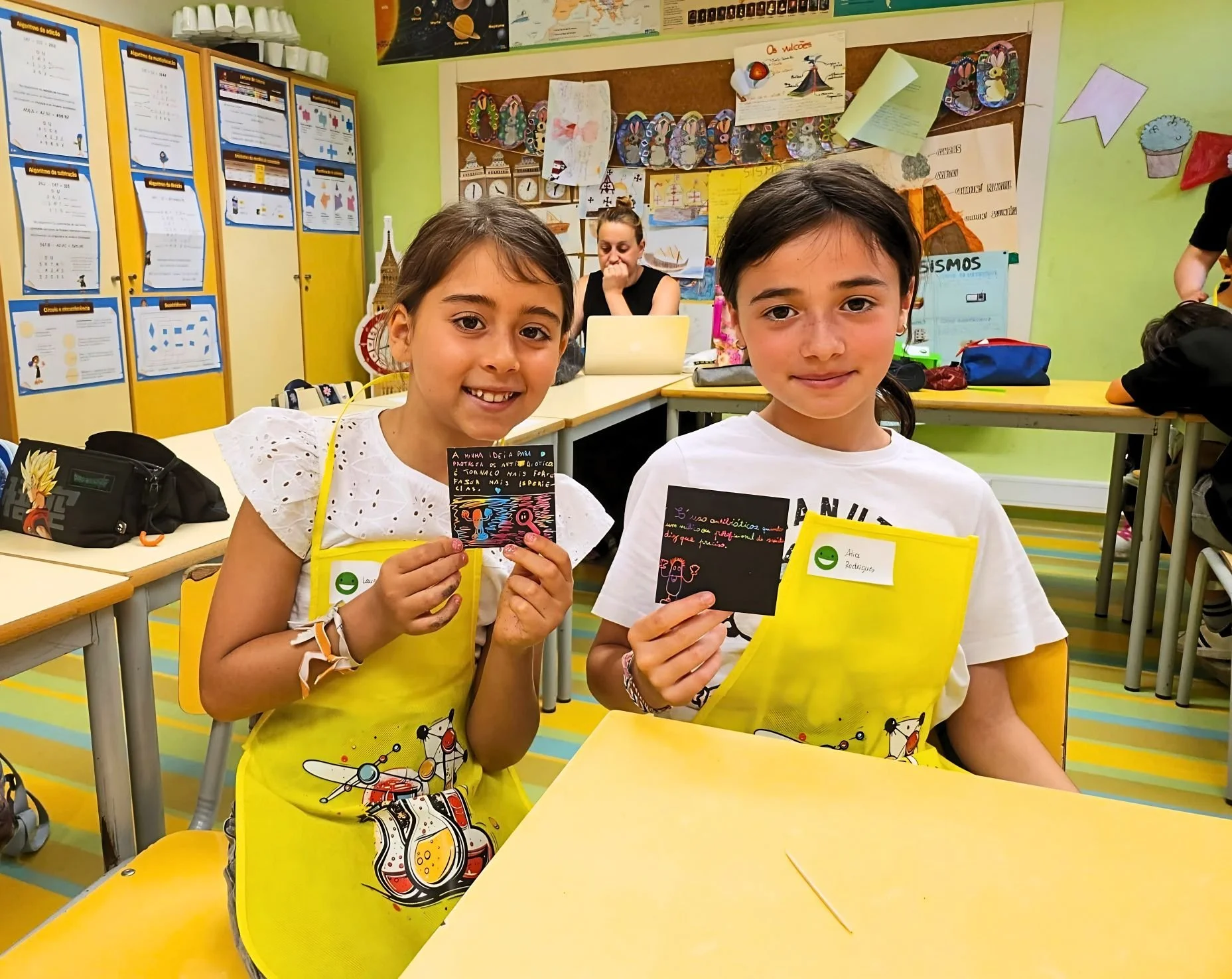
At the end of the session, each child was tasked with drawing or writing one idea for helping antibiotics continue to work. Their contributions formed a collective wall of “Antibiotic Guardians”, connecting the biology they had explored with choices they may encounter in everyday life.
The children's explanations and uncertainties can be heard in short film about what primary-school pupils know about antibiotics
The wider vision behind the program
What the children told us — and what comes next
Of the 153 children who participated in the workshop, 127 completed a short post-workshop questionnaire. Among respondents, 85.8% said they had learned many new things, and 74.0% wanted to learn much more about the science of bacteria. The experience was described as "spectacular" or "interesting" by 98.4% of participants, while 93.7% said they had very much enjoyed meeting the scientist.
These responses capture perceived learning, enjoyment and motivation immediately after the workshops. However, it does not yet reveal what the children comprehended or what they will recall months later. What they do reveal is an immediate engagement with a program in which returning pupils were invited to explore increasingly demanding microbiology and a clear appetite among many children to continue learning.
In a program designed to return, the subsequent set of questions is more challenging. Can pupils recover these ideas months later? Can they use them to interpret a new problem? Which explanations have become more precise, and which misconceptions remain? Continuity makes it possible to listen again, adapt what comes next and avoid treating every encounter as a first encounter.
Just as important is who has the opportunity to participate. Science engagement often depends on a family finding an event, having transport, or already believing that science is “for” their child. In Armamar, every primary class participates during the ordinary school day. Access does not require traveling to a university, science center, or laboratory.
This matters in a rural municipality, where the inequalities are often associated with geographical proximity, rather than individual capabilities or aspirations. Regular contact with scientists, laboratories and scientific institutions is easier to obtain in some places than in others. The program cannot remove every dimension of that inequality, but it can ensure that geographical location does not determine children's access to microbiology education at school.
The innovation of the Armamar model, lies not in any single activity, analogy, or experiment, but in the way its elements work together: municipality-wide access, annual continuity, progressively more demanding content, direct contact with a scientist, hands-on inquiry, and evaluation across years.
The programme is sustained by a partnership between ARMA-Sci — Armamar Network for the Promotion of Science Capital, the Gomes Teixeira School Cluster and the Municipality of Armamar, with scientific collaboration from UCIBIO at the Faculty of Pharmacy of the University of Porto.
The activities are locally designed, but the principles can travel: start early, include everyone, build on what came before, listen to how children think and return with the next question.
A public health choice
A public-health choice
International Microorganism Day makes the microbial world visible. But antibiotic literacy cannot be built in a day — and it should not begin only when someone is ill.
If we expect people to make informed decisions about antibiotics, we must give them opportunities to understand bacteria, viruses and resistance before those decisions become urgent. That opportunity should not depend on geography, family resources or proximity to a university.
In Armamar, returning to every primary classroom has turned microbiology from a one-off encounter into a learning pathway. This is more than an outreach model. It is a public-health choice: to build understanding early, continuously and equitably.
Protecting antibiotics begins long before the first prescription. The question is no longer whether primary school children are ready to engage with this science, but whether our education systems are equipped to make it available to every child.
About the author
Raquel Branquinho is a microbiologist and researcher at UCIBIO, Faculty of Pharmacy of the University of Porto, and co-founder and president of ARMA-Sci — Armamar Network for the Promotion of Science Capital. Her work focuses on science communication, public engagement and democratising access to science in rural communities.